
Commercial pest control for Canberra businesses.
Audit-ready reporting, discreet scheduling and after-hours service for offices, restaurants, warehouses, strata and schools. We work around your trading hours, send fully licensed technicians, and leave a written record of every visit.
Six sectors. One specialist team.
From hospitality and retail front-of-house through to industrial sites and aged care, TCB delivers commercial pest control that fits the way your business actually runs. Talk to us about a schedule that works for you.
Hospitality & Food Service
Restaurants, cafés, pubs and food prep venues — HACCP-aware treatments with audit-ready reporting.
Retail & Offices
Discreet before-hours or after-hours service that keeps your shop floor and staff undisturbed.
Strata & Real Estate
Body corporate schedules, pre-sale inspections and tenant-safe treatments for residential complexes.
Schools & Childcare
Family-safe product, low-tox application and scheduling around drop-off, lunch and pick-up windows.
Industrial & Warehousing
Stored-product pest management, rodent monitoring and perimeter treatments for large sites.
Healthcare & Aged Care
Low-impact treatments aligned with infection control and resident-safe scheduling.
Built around how businesses actually work.
Commercial pest control is operational, not just technical. TCB treats around service hours, supervisors and stock — leaving your team to keep trading and your auditor with the paperwork they need.
Audit-ready written reports
Every visit closes with a written record of products applied, locations treated and observations — ready for your compliance file.
Discreet after-hours scheduling
Pre-open, post-close or weekend bookings so service trades don't interrupt your customers, staff or residents.
Compliance & food-safety aware
HACCP-aware treatment for kitchens and prep areas, with scheduling and products aligned to your food-safety plan.
The paperwork, line by line.
Every commercial client we work with has an external auditor or compliance owner. Here's what we put on the table before the first visit — and what appears on your file after every job.
FSANZ Standard 3.2.2
Food Standards Australia New Zealand Standard 3.2.2 requires all food businesses to take all practicable measures to prevent pests from entering food premises and to eradicate any that do. A documented pest management program covering inspection schedules, treatment records, and corrective actions satisfies this requirement and protects your food safety licence.
HACCP & third-party audits
Our IPM documentation forms part of your HACCP audit trail — which is exactly what a food safety auditor will ask to see. Every service report records products applied, areas inspected, pest activity observed, and corrective actions recommended. We can tailor our reporting format to align with HACCP, SQF, or retail supplier standards.
Accreditation requirements
For aged care facilities, hospitals, and childcare centres, documented pest management is a condition of accreditation. Our written service reports provide evidence of due diligence if a pest-related complaint is raised by a customer or regulator — and give your facility manager a clear picture of pest trends across the property over time.
Pests treated in commercial environments.
Commercial buildings in Canberra are most frequently affected by cockroaches, rodents, ants, flies, spiders, and stored-product insects. Termite management is also a priority for any commercial property with timber structural elements — Canberra's established suburbs carry well-documented termite pressure. Each environment presents different pest pressures; we match our approach to the site, not the other way around.
Cockroaches
German and American species are the most common in Canberra commercial kitchens, food prep areas, and drains. A single sighting during a health inspection can trigger a compliance notice.
Rodents
Rats and mice contaminate food-contact surfaces, gnaw through electrical cabling, and carry pathogens including salmonella and leptospira. Even indirect evidence of rodent activity is sufficient grounds for a health authority compliance notice.
Ants & flies
Ant trails through food prep areas and flies around waste storage are common health-inspection failures for Canberra food businesses. Both require targeted treatment aligned with how the premises operates.
Stored-product insects
Grain beetles, pantry moths, and weevils affecting food manufacturing, hospitality storage, and warehouse environments. Monitoring and treatment are matched to the stock type and site conditions.
Wasps & bees
Particularly relevant for outdoor hospitality and childcare areas during Canberra's warmer months. Nest removal and deterrence are scheduled around operational hours to minimise disruption to staff and customers.
Bed bugs
In hotels and short-term accommodation, bed bug infestations require immediate, thorough treatment using registered insecticides. We provide inspection, treatment, and re-treatment guarantees on confirmed infestations.
Silverfish & carpet beetles
In archival and office environments, silverfish and carpet beetles damage documents and furnishings. Treatment is targeted to harbourage sites and matched to the sensitivity of the space and its contents.
Bird deterrence
Pigeon and bird deterrence for loading docks, rooftops, and plant rooms. Exclusion netting, spike systems, and deterrent programs designed around commercial access and structural constraints.
An integrated approach that reduces pest activity over time.
Our approach is built around integrated pest management (IPM) — a structured method recommended by the Australian Environmental Pest Managers Association (AEPMA) that combines inspection, monitoring, targeted treatment, and preventive measures to reduce pest activity while minimising unnecessary chemical use. We do not apply a blanket treatment on every visit.
Inspect & assess conditions
We inspect for pest entry points and assess conducive conditions — moisture, warmth, and accessible food sources. Understanding why pests are present drives more effective long-term control than treating symptoms alone.
Targeted treatment only
Targeted treatments are applied where activity is confirmed — not as a blanket application. Product selection and application method are matched to the pest species, site type, and the vulnerability of occupants and staff.
Written record after every visit
After every service we provide a written report covering areas inspected, pest activity observed, products and methods used, corrective action recommendations such as sealing entry points or addressing drainage, and the date of the next scheduled service.
Service frequency matched to your risk level.
Consistent scheduled pest management is more effective than reactive treatments and generally costs less across the year — a single call-out to address an established infestation typically requires more intensive methods than a preventive program would have needed to begin with. We also schedule treatments for early mornings, evenings, or weekends so your operations continue uninterrupted; after-hours servicing is the standard arrangement for restaurants, pharmacies, medical centres, and retail clients.
High-risk environments
Food manufacturing, restaurants, hotels, aged care, and other sites where pest activity carries immediate compliance or safety consequences. Monthly service as a minimum, with more frequent visits during periods of high pest pressure or following a failed inspection.
General commercial premises
Offices, retail outlets, and general commercial premises where pest pressure is moderate and the primary goal is early detection. Reactive call-outs are available between scheduled services if activity is observed between visits.
Lower-risk & seasonal sites
Lower-risk commercial sites or properties requiring specific seasonal pest treatments — such as wasp nest control heading into Canberra's summer. Every program runs to a fixed schedule; we arrive when agreed and leave a service report before we go.
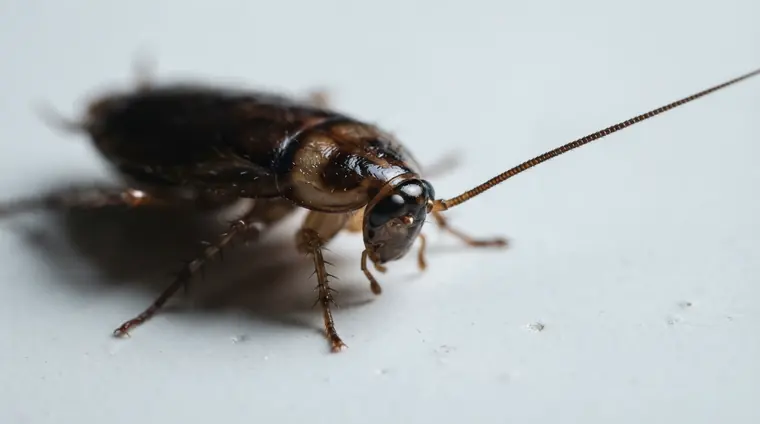
One cockroach.
Zero tolerance.
A single sighting can put a food licence, a brand and a booking diary on the line. Our commercial service targets the species, the entry points and the harbourage — backed by a 100% satisfaction guarantee on every job.
Commercial rodent control, beyond the bait station.
Rodents are among the most damaging pests in commercial environments. Rats and mice contaminate food and food-contact surfaces, gnaw through electrical cabling and insulation, and carry pathogens including salmonella and leptospira. In food businesses, even indirect evidence of rodent activity — droppings, gnaw marks, grease trails along walls — is sufficient grounds for a health authority compliance notice. We do not rely on baiting alone; bait without exclusion work treats the symptom rather than the cause.
Tamper-resistant bait stations
Tamper-resistant bait stations positioned at identified activity points — entry routes, harbourage zones, and along rodent runways. Station placement is documented and inspected on every scheduled visit.
Exclusion assessment
We assess entry points — gaps around pipes, drainage, and loading dock perimeters — and recommend closures that stop re-infestation after treatment. A thorough exclusion assessment is standard on every rodent program.
Digital pest monitoring
For high-risk or large-footprint sites, digital pest control monitoring using sensors to detect rodent activity between scheduled visits is available — giving your facility manager real-time data rather than waiting for the next inspection.
Commercial routes across the ACT.
We run regular commercial routes through every Canberra district and the surrounding region. If your site sits outside these suburbs, get in touch — we likely cover it too.
What commercial pest control costs.
Commercial pest control pricing depends on four variables: the size of the premises, the type and extent of pest activity, the frequency of scheduled visits, and any compliance or access complexity. A small retail tenancy on a quarterly program sits at a very different price point to a monthly food manufacturing program covering several thousand square metres.
We provide fixed-price quotes for scheduled programs so you can budget accurately across the year, with no surprise charges for standard visits. For a specific quote, we carry out a brief site assessment — either in person or by reviewing the floor plan and talking through your site's history. If you are not certain what frequency suits your site, we will assess the premises and give you a clear recommendation based on what we find, not a default package.
Tell us about your site.
We'll quote it.
One business day for a written commercial quote and a recommended service schedule. Discreet, audit-ready, ACT-wide — family-run and locally owned.