
Carpenter ant control, tracked to the colony in Canberra.
Carpenter ants excavate timber to build nests, causing structural damage over time. Effective ant control requires locating the colony and treating it directly — surface sprays alone will not remove carpenter ants from an established nest. TCB Pest Control provides targeted ant pest control across the ACT, using ant control solutions matched to the nest location, the species confirmed on site, and the scale of the infestation.
Identifying carpenter ant species.
Size & colour
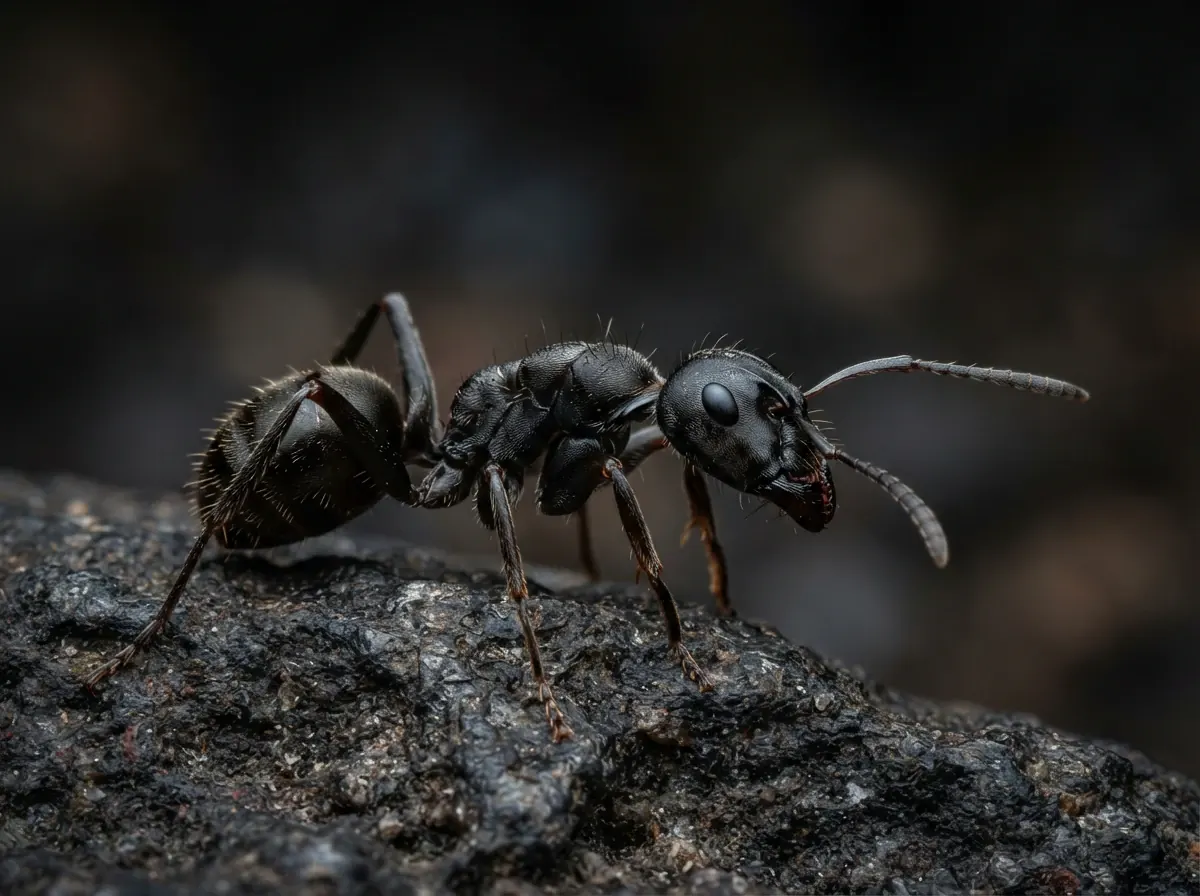
Worker carpenter ants in Australia belong to the genus Camponotus. They are large — ranging from around 6 mm up to 12 mm for workers — and black to dark brown. The queen is considerably larger. These are among the largest ant species found in homes throughout Australia, and their size is the first identifier on site.
Body shape
Carpenter ants have a single-node waist and a distinctly rounded thorax. These structural markers separate them from black ants, coastal brown ants, and Argentine ants — all of which are also active in the Canberra region. Identifying the species correctly matters, because carpenter ants require different control solutions to the others.
Winged ants vs termites
Winged carpenter ants, known as reproductives, emerge during swarming season and are sometimes mistaken for termites. The difference is in the antennae: carpenter ants have distinctly elbowed antennae and a pinched waist, while termites have straight antennae and a broad, uniform body with no visible waist.
Signs of carpenter ant infestations.
Because carpenter ants forage mainly at night, many Canberra homeowners do not detect carpenter ant infestations until a colony is well established. A single carpenter ant indoors may be a scout; a regular trail returning consistently to the same spot is a stronger indication that a colony has established inside or adjacent to your home.
Frass near timber
Sawdust or frass appearing near window frames, skirting boards, or roof void access points is the most reliable early indicator of a carpenter ant colony excavating inside the structure.
Ant trails after dark
Ant trails running along walls, pipes, or garden paths after dark. Carpenter ants forage at night, so visible trail activity at dusk or after is a strong sign of a nearby colony.
Scout ants indoors
Scout ants exploring indoors during the day, particularly near the kitchen or laundry. Scouts range well ahead of the main colony and may appear long before a full trail develops.
Rustling in walls or ceiling
A faint rustling sound inside wall cavities or the ceiling, especially at night, can indicate worker activity inside timber framing — particularly in older homes with ageing weatherboard or structural timbers.
Winged ants in spring
Winged ants emerging from a wall or ceiling in spring signals an established colony nearby. Swarming reproductives mean the colony is mature and large enough to produce new queens — professional treatment should not be delayed.
Carpenter ants vs termites — both target timber.
Both pests target timber and both are attracted to moist wood, but they are not the same insect. Termites eat wood; carpenter ant colonies excavate it to build gallery systems, leaving behind a sawdust-like material called frass. Over time, carpenter ant infestations hollowing out load-bearing timber can cause structural damage that is expensive to repair.
According to the Pest Management Association of Australia, distinguishing between timber-damaging insects early is critical, because treatment approaches differ entirely. If you notice frass near skirting boards or wall cavities, have a professional confirm which pest you are dealing with before committing to a treatment path.

How carpenter ants enter your home.
Structural voids
Weep holes, roof cavities, and plumbing penetrations are common entry routes. Carpenter ants nest outdoors in decaying trees, old stumps, and moisture-affected garden timbers, then forage inside through these gaps.
Landscaping contact
Tree branches and shrubs touching the roofline or exterior walls act as direct bridges into the structure. Ants may also enter through gaps around window frames and cable penetrations once they are foraging at that level.
Moisture & food
Ants are attracted to food or water sources — pet food, sweet foods left on benches, and the honeydew produced by aphids on garden plants all draw foragers inside. Moisture-damaged timber is the primary draw for nesting carpenter ants specifically.
Sealing entry points
Sealing entry points and addressing moisture damage can stop ants from entering your home, but neither action alone will eliminate a colony that has already nested inside the structure. Direct nest treatment is required once a colony is established.
Professional ant pest control in Canberra.
Professional pest control is the surest way to get rid of carpenter ant colonies where DIY bait placement has not succeeded. Our approach follows integrated pest management principles: locate the nest, apply an effective treatment suited to its type and location, then follow up to confirm the colony has been eliminated.
Gel & granular bait
Gel bait or granular ant baits placed on confirmed foraging trails. Bait type — protein or carbohydrate — is matched to what the colony is currently foraging for. Worker ants carry it back to feed the rest of the colony, which can gradually collapse over two to four weeks when applied correctly.
Residual spray
A residual spray treatment to the perimeter, subfloor, and roof void. Applied to the exterior foundation line, door frames, window sills and known entry points. Family-safe product, low-odour, written re-entry times on every quote.
Dust applications
Dust applications into wall cavities where the nest is not directly accessible. Insecticide dust penetrates void spaces and remains active over a longer period than liquid treatments, making it effective against colonies established deep within timber framing.
Follow-up inspection
A follow-up inspection to confirm the colony has not relocated within the structure. Dead ants appearing near bait stations during the first week are a sign the treatment is working. Our pest control solutions cover residential and commercial properties across the ACT.
Preventing ant colonies from coming back.
After treatment, removing the conditions that attract ants and sustain colonies is the most effective long-term step. Sealing entry points and addressing moisture damage are the two most important changes any Canberra homeowner can make.
Fix leaks & replace wet timber
Fix leaks and replace moisture-damaged timber promptly. Damp wood is the primary draw for nesting carpenter ants — a single moisture problem can sustain a colony for years.
Clear the yard
Remove dead stumps, old railway sleepers, and decaying garden timbers from the yard. These are the primary outdoor nesting sites that sustain a colony before it expands into the home.
Cut back vegetation
Cut back tree branches and shrubs that touch the roofline or exterior walls. Vegetation contact is one of the most common physical routes ants use to access the upper levels of a home.
Store firewood off the ground
Store firewood elevated off the ground and away from the house. Woodpiles stacked against the exterior wall are a classic secondary nesting site — carpenter ants will establish a satellite colony there before moving indoors.
Seal penetrations
Seal gaps around pipes, cables, and weep holes to stop ants from re-entering. Even a treated property will see re-infestation if the physical entry points remain open and outdoor conditions are favourable.
Remove food sources
Keep pet food in sealed containers and clean up food spills promptly. Ants are attracted to food or water, and consistent food availability near entry points significantly increases the chance of a colony establishing inside.
The questions Canberra homeowners ask first.
Do carpenter ants bite?
Yes. Carpenter ant bites are not venomous, but the mandibles are strong enough to break skin, and the ant can also spray formic acid into the wound, which causes a brief burning sensation. They generally only bite when handled or disturbed close to the nest. The reaction is irritating rather than medically significant for most people — wash the area thoroughly and monitor for any sign of sensitivity.
Can I treat carpenter ants with DIY sprays?
Over-the-counter sprays kill adult ants on contact but rarely reach the nest. Ant baits — including gel bait formulations — are a more effective treatment: workers carry the bait back to feed the colony, which can gradually collapse over two to four weeks when applied correctly. Bait placement must align with active ant trails, and the bait type must match what the colony is currently foraging for.
How do I know if it’s carpenter ants or termites?
Carpenter ants leave frass — coarse sawdust — near their galleries. Termites consume the wood from the inside and leave mud tubes or damaged, hollowed-out timber with no frass. On the insect itself: carpenter ants have elbowed antennae and a pinched, single-node waist; termites have straight antennae and a broad, uniform body with no visible waist. If you are unsure, call a professional to confirm before starting any treatment.
Frass in the framing —
tracking the colony before the damage compounds.
Carpenter ants don't start in the wall — they start in the garden bed, the dead stump, the moisture-affected sleeper. TCB tracks the trail back to the nest, applies a treatment matched to its location and scale, and writes up the result so the problem doesn't restart next season.
Book carpenter ant control today.
If you have spotted carpenter ants indoors, found frass near timber framing, or noticed damage to woodwork that could indicate an ant problem, contact TCB Pest Control for an inspection and ant treatment quote. Our professional ant control experts service homes and businesses throughout Canberra and the surrounding region, with same-week appointments available in most areas.