Find a spider in the house and the instinct is usually to assume the worst. In reality, the vast majority of spiders you'll cross paths with in Canberra are harmless — it's a small handful of species that actually matter medically, and knowing which ones they are (and which they aren't) makes the whole subject far less alarming. This guide walks through what's genuinely dangerous, how to tell one species from another, and why they end up in the spots they do.
What Dangerous Australian Spiders Live in Canberra?
Of the dozens of spider species you might see around an ACT home, only a few are considered medically significant. The redback is by far the most commonly confirmed culprit behind bites requiring hospital treatment in Canberra — ACT Health figures typically show a handful of confirmed cases each year, almost all from reaching into sheds, letterboxes, or gaps around outdoor furniture without checking first. Redback antivenom is stocked at Canberra and Calvary hospitals.
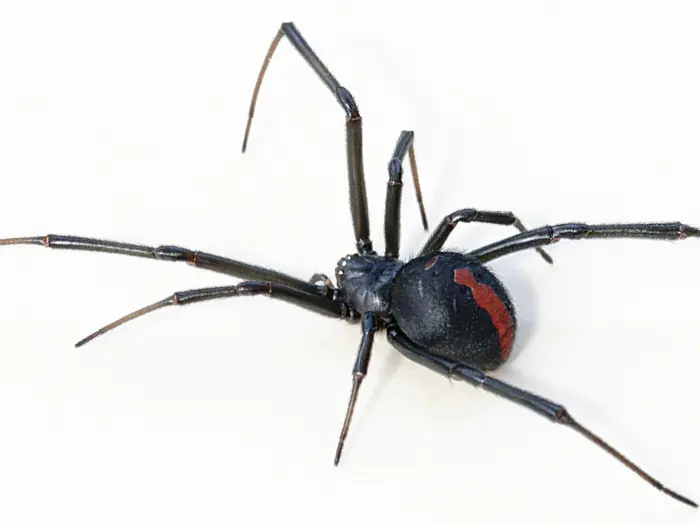
Redback spider (Latrodectus hasselti). Photo: Toby Hudson, CC BY-SA 3.0, via Wikimedia Commons.
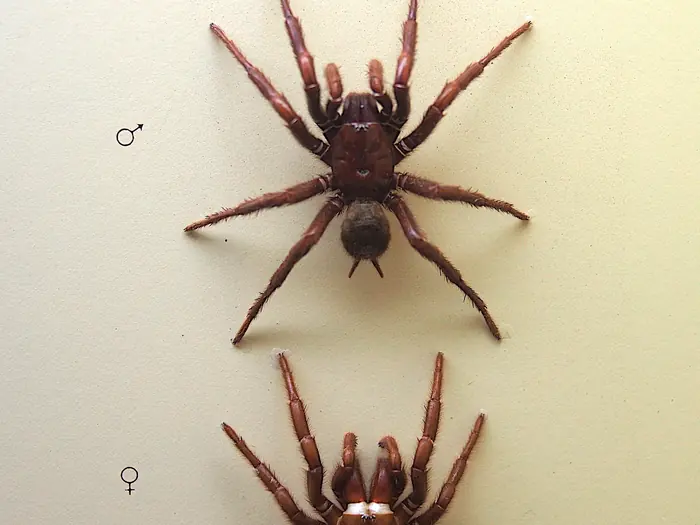
The mouse spider is less familiar to most households but carries venom that can be on par with a funnel-web's. It lives in a silk-lined burrow, is often mistaken for its more famous relative, and — usefully — sometimes delivers a "dry" bite with no venom at all, though it should never be assumed safe. The true Sydney funnel-web is the most serious spider in the country, but it's genuinely uncommon this far inland; most funnel-web encounters in the ACT trace back to spiders carried in on firewood or timber from the coast, with occasional naturally occurring sightings after heavy rain in moist garden beds. Any suspected funnel-web or mouse spider bite is a call-000 situation — apply a pressure immobilisation bandage and get to hospital.
Sydney funnel-web spider (Atrax robustus). Photo: Sputniktilt, CC BY-SA 3.0, via Wikimedia Commons.
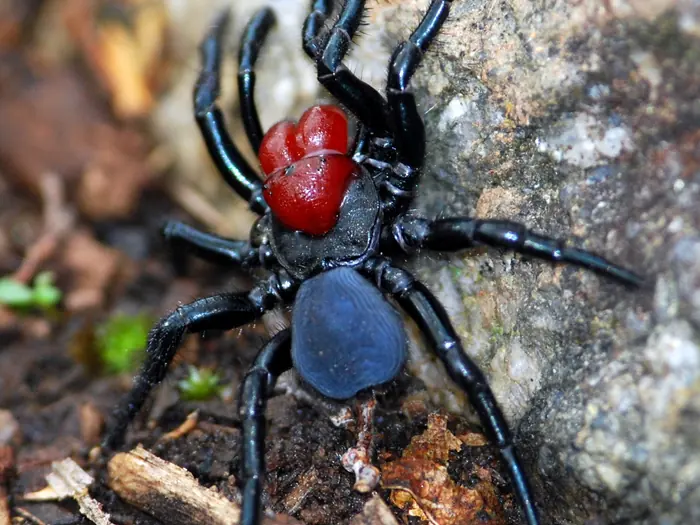
Mouse spider (Missulena occatoria), male. Photo: Peripitus, CC BY-SA 3.0, via Wikimedia Commons.
Here's where the myths creep in. Size and appearance are poor indicators of actual danger — a huntsman spanning 15 centimetres across the wall looks far more frightening than a redback the size of a pea, yet it's the redback that sends people to hospital. Huntsmen and wolf spiders can both deliver a painful bite, but neither is considered a threat to a healthy adult. The realistic picture is this: genuinely dangerous bites are rare events in Canberra, and most spider sightings — however unsettling — don't need anything more than a sensible response.
How to Identify Common Australian Spiders in Your Home
Three features do most of the work when telling species apart: overall body shape, leg span, and where the eyes sit on the head. A huntsman has a flattened, oval body built for squeezing into bark crevices and wall gaps, with a leg span that can reach 15 centimetres and a distinctive crab-like sideways scuttle — it doesn't build a web and relies on speed to hunt. Compare that with a black house spider, which is compact and dark with a much shorter leg span, and gives itself away by its messy, funnel-shaped web tucked into window frames, eaves, and door corners rather than by how it moves.
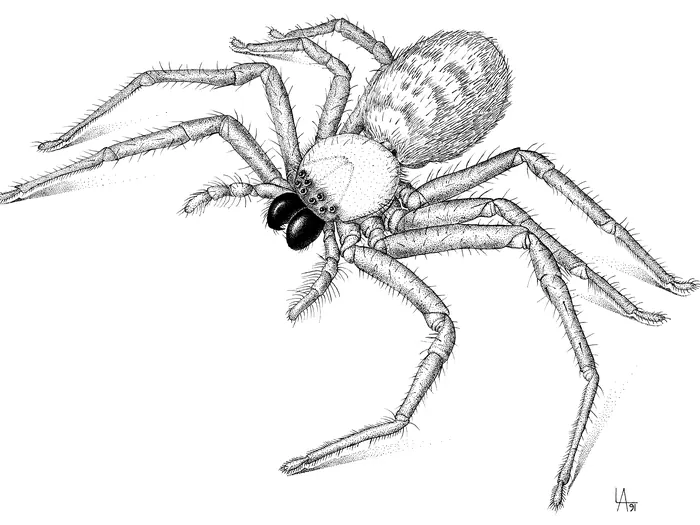
Flat huntsman spider (Delena cancerides), female. Photo: Anthony Harris, CC BY 4.0, via Wikimedia Commons.
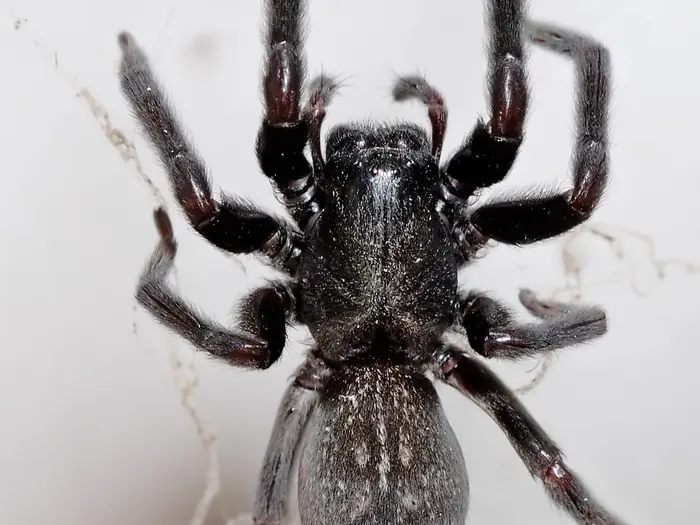
Black house spider (Badumna insignis). Photo: Fir0002, GFDL 1.2, via Wikimedia Commons.
The white-tailed spider is the third common indoor find — a grey, cylindrical body with the small pale marking at the tip of the abdomen that gives it its name. Unlike the black house spider, it doesn't build a web at all; it's an active night-time hunter that wanders into bed linen, clothing left on the floor, and shoes, often while tracking down other spiders to eat. If you want a closer visual comparison across a wider range of species, our blog guide to Canberra spiders covers the identifying detail for each one side by side.
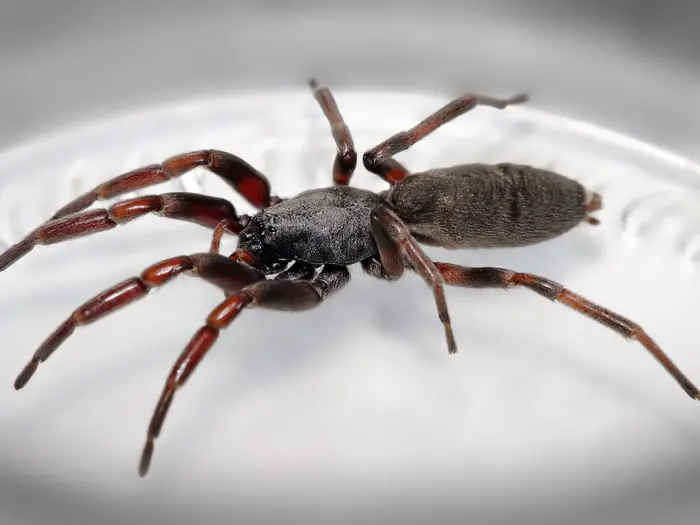
White-tailed spider (Lampona sp.). Photo: Fir0002, GFDL 1.2, via Wikimedia Commons.
Why Australian Spiders Hide in Specific Spots Around Your House
Spiders don't turn up in sheds, under outdoor furniture, and behind the washing machine by accident — they're chasing a stable microclimate. Dark, undisturbed spaces hold their temperature and humidity more consistently than open areas, which matters to an animal that can't regulate its own body heat. Those same sheltered spots also attract the insects spiders feed on, so a shed with a moth problem is doing double duty as a spider magnet. Ground-dwelling hunters like the wolf spider take a slightly different approach again, digging a burrow in mulch, garden beds, or leaf litter and ambushing prey from the entrance rather than building a web.
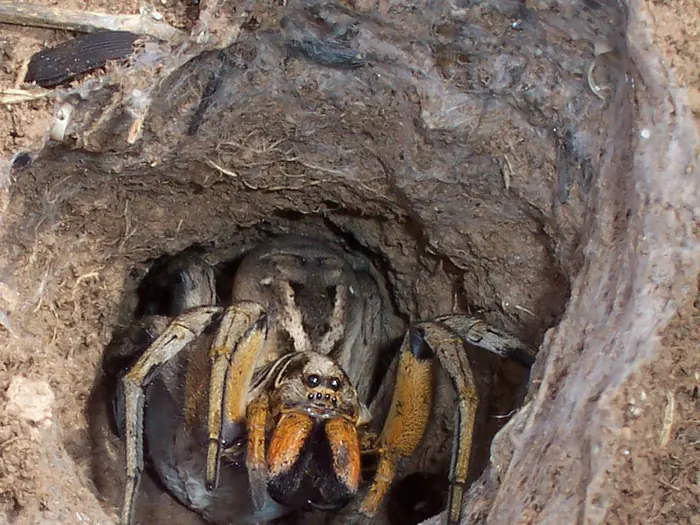
Wolf spider (family Lycosidae) at its burrow entrance. Via Wikimedia Commons, CC BY-SA 3.0.
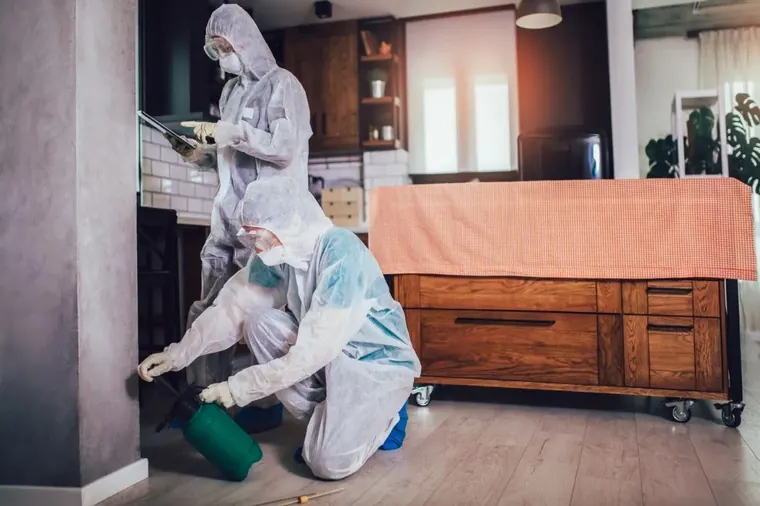
Knowing this cuts both ways. It explains why a shed clear-out or a tidy-up under the deck often turns up more spiders than expected — you're disturbing exactly the conditions they came for — and it points to where a proper treatment needs to focus. A surface spray around a doorframe barely touches the actual population if the shed, the woodpile, and the garden bed edge are all still untouched. That's the gap a professional inspection is built to close.
When to call a professional
Most Canberra households we meet try the DIY route first — and sometimes that's enough. Other times the species is medically significant, the population is established around the property, or the right product simply isn't on the supermarket shelf. The honest answer is: if you're asking the question, a quick call is the cheapest way to find out.
For a tailored conversation about spider control in Canberra homes, in and around the property, our team is on the other end of the phone. Same-week availability across the ACT, family-safe product on every job, and a written report after every visit. We'll quote first, treat second — never the other way around.
Or call us directly on 02 6105 9771 for a quick conversation.